ENNEAGRAM
THEWINGS
THEWINGS
How Neighboring Types Shape Your Style, Presence, and Expression
Opening Orientation
Every Enneagram type carries a clear inner drive. That central motivation shapes the way you
move through the world. Yet no one lives from their core type alone. Each type is influenced by
the two numbers beside it. These neighboring types are called wings. They add tone, texture, and
subtle shifts in expression. They do not change your motivation. They help clarify the way your
motivation becomes visible in your attitude, behavior, and relationships.
Wings show up in moments of movement. In the choices you make without thinking. In the style of your communication. In how you relate to expectations or disappointment. Your wing may soften or intensify your type. It may pull you toward others or invite you inward. It may add structure to your spontaneity or creativity to your discipline.
Some people feel the presence of one wing very clearly. Others notice both wings in different seasons. Many experience their wing as an influence rather than an identity. Wings operate quietly in the background, but they leave a recognizable imprint on your posture toward the world.
Understanding your wing helps you see the particular way you carry your type. It highlights the blend of traits that shape your presence. And it offers language for the nuanced patterns that make your type feel like your own.
Wings show up in moments of movement. In the choices you make without thinking. In the style of your communication. In how you relate to expectations or disappointment. Your wing may soften or intensify your type. It may pull you toward others or invite you inward. It may add structure to your spontaneity or creativity to your discipline.
Some people feel the presence of one wing very clearly. Others notice both wings in different seasons. Many experience their wing as an influence rather than an identity. Wings operate quietly in the background, but they leave a recognizable imprint on your posture toward the world.
Understanding your wing helps you see the particular way you carry your type. It highlights the blend of traits that shape your presence. And it offers language for the nuanced patterns that make your type feel like your own.
What Wings Are
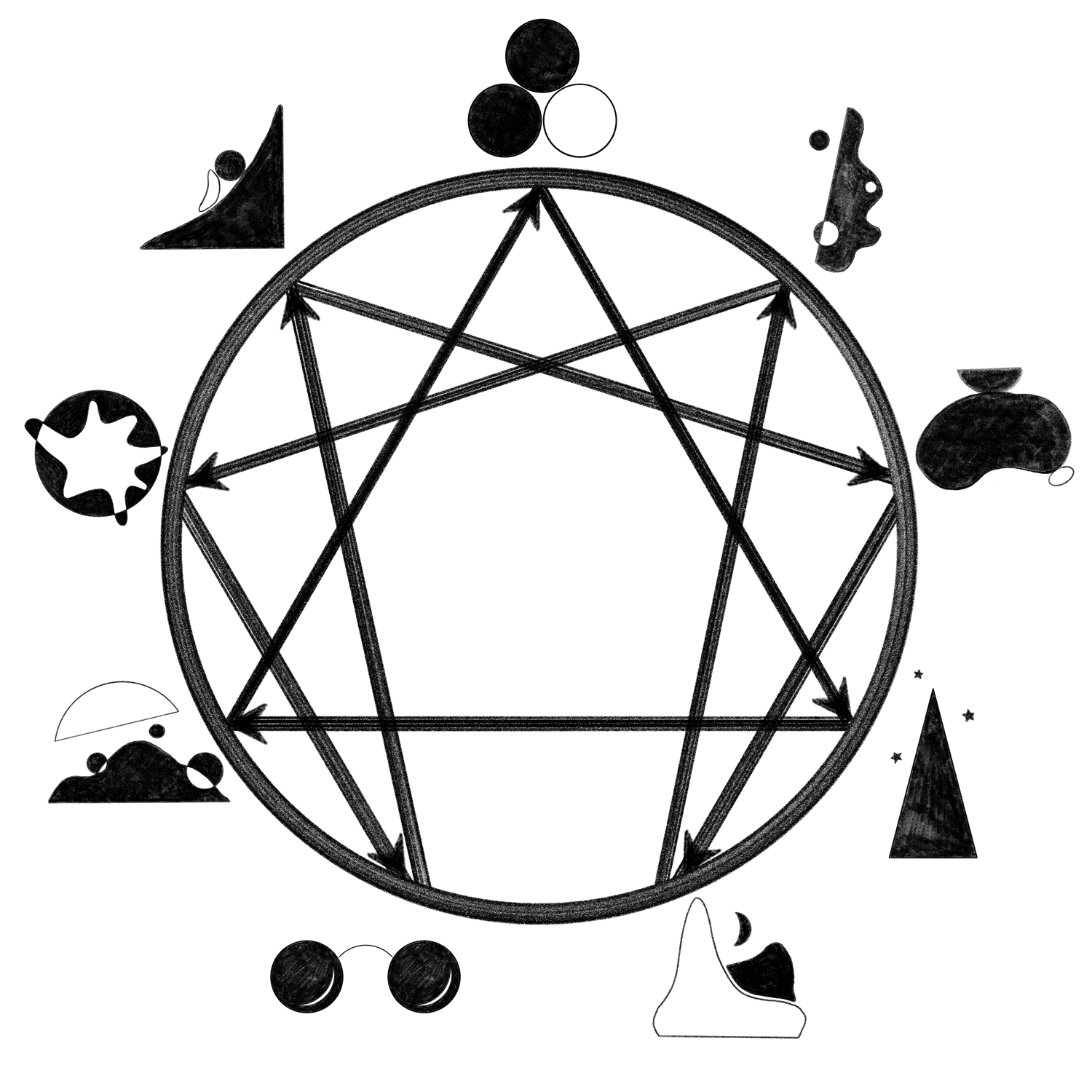
A wing is the neighboring type that sits directly beside your primary number on the Enneagram.
Each type has only two possible wings. For example, Type Four sits between Type Three and Type
Five. Those two numbers are the only wings available to a Four. The same is true across the
entire system. Wings draw from proximity, not preference.
Your wing adds a secondary layer of influence to your personality. It colors your style, shapes your tone, and adds a recognizable shading to the way you move through life. When people who share your type feel different in their expression, their wing is often the reason. A wing explains why one Type Eight feels volcanic and expressive while another feels steady and protective. Both are unmistakably Type Eight. Their wings simply influence how their inner force reaches the outside world.
Wings do not determine your type. They do not hold your core motivation. They do not define your identity. They operate as companions. They sit beside your type and lend qualities that modify the way your type expresses its energy.
Wings often come forward through daily habits, body language, social style, and the roles you naturally step into. A person may speak with more warmth, or more caution, or more clarity because of their wing. They may be drawn toward certain responsibilities or away from certain conflicts because of their wing’s influence.
While your core type answers the question “Why do I do what I do?” your wing helps answer “How do I carry that motivation into the world?” It brings dimension, balance, and subtle movement to your personality. Without wings, the Enneagram would feel flat and overly rigid. With wings, it becomes more alive, more varied, and more reflective of the complexity found in real human experience.
Your wing adds a secondary layer of influence to your personality. It colors your style, shapes your tone, and adds a recognizable shading to the way you move through life. When people who share your type feel different in their expression, their wing is often the reason. A wing explains why one Type Eight feels volcanic and expressive while another feels steady and protective. Both are unmistakably Type Eight. Their wings simply influence how their inner force reaches the outside world.
Wings do not determine your type. They do not hold your core motivation. They do not define your identity. They operate as companions. They sit beside your type and lend qualities that modify the way your type expresses its energy.
Wings often come forward through daily habits, body language, social style, and the roles you naturally step into. A person may speak with more warmth, or more caution, or more clarity because of their wing. They may be drawn toward certain responsibilities or away from certain conflicts because of their wing’s influence.
While your core type answers the question “Why do I do what I do?” your wing helps answer “How do I carry that motivation into the world?” It brings dimension, balance, and subtle movement to your personality. Without wings, the Enneagram would feel flat and overly rigid. With wings, it becomes more alive, more varied, and more reflective of the complexity found in real human experience.
How Wings Develop
Wings develop through experience. They are shaped by the environments you grew up in, the
expectations placed on you, and the roles you stepped into as you learned how to relate to the
world. Your wing often reflects the qualities you needed in order to adapt, belong, or protect
yourself. Sometimes it reflects traits you admired or felt drawn toward. Other times it mirrors
what the environment required from you in order to stay connected or safe.
Many people form a strong connection with one wing early in life. The influence may come from family culture, school dynamics, or the expectations of caretakers. A child in a structured home may lean toward one wing. A child in a more expressive or chaotic home may lean toward the other. The wing becomes a natural extension of your personality, blending with your type in a way that feels intuitive.
Not everyone experiences one dominant wing. Some people shift between both wings depending on context. Your career, friendships, partnerships, and responsibilities may pull different qualities forward. As life unfolds, you may recognize traits from the wing you once overlooked. You may notice a quiet influence becoming stronger. This is not a change in type. It is the natural expansion that happens as you grow.
Wings evolve with maturity. Early in life, your wing may appear in a narrow form, shaped by habit or survival. Over time, you begin drawing from the strengths of your wing more intentionally. You may soften certain rigidities by reaching toward the opposite wing. You may find new flexibility that was not available before. Healthy development often includes growing into the fuller range of both wings, even if one remains more prominent.
Wings are not chosen. They reveal themselves through patterns, preferences, and relational habits. They show up in the qualities you express without thinking, the roles you feel comfortable playing, and the ways you react when stress rises. Paying attention to these patterns helps you understand which wing supports your type most naturally.
Wings are companions that grow with you. They mature as you mature. They become more spacious as you become more grounded. And over time, they offer resources that help you move through life with more balance, clarity, and presence.
Many people form a strong connection with one wing early in life. The influence may come from family culture, school dynamics, or the expectations of caretakers. A child in a structured home may lean toward one wing. A child in a more expressive or chaotic home may lean toward the other. The wing becomes a natural extension of your personality, blending with your type in a way that feels intuitive.
Not everyone experiences one dominant wing. Some people shift between both wings depending on context. Your career, friendships, partnerships, and responsibilities may pull different qualities forward. As life unfolds, you may recognize traits from the wing you once overlooked. You may notice a quiet influence becoming stronger. This is not a change in type. It is the natural expansion that happens as you grow.
Wings evolve with maturity. Early in life, your wing may appear in a narrow form, shaped by habit or survival. Over time, you begin drawing from the strengths of your wing more intentionally. You may soften certain rigidities by reaching toward the opposite wing. You may find new flexibility that was not available before. Healthy development often includes growing into the fuller range of both wings, even if one remains more prominent.
Wings are not chosen. They reveal themselves through patterns, preferences, and relational habits. They show up in the qualities you express without thinking, the roles you feel comfortable playing, and the ways you react when stress rises. Paying attention to these patterns helps you understand which wing supports your type most naturally.
Wings are companions that grow with you. They mature as you mature. They become more spacious as you become more grounded. And over time, they offer resources that help you move through life with more balance, clarity, and presence.
Why Wings Matter
Wings matter because they reveal how your type expresses itself from the inside out. Two people
can share the same Enneagram type and carry very different energies. One may come across as
gentle and measured. Another may feel bold and expressive. Both are true to their type, yet
their wings shape the way their motivation comes forward in daily life.
Your wing influences the posture you take toward the world. It shows up in your tone of voice, your relational habits, your communication style, and the kinds of responsibilities you gravitate toward. It offers clues about how you approach conflict, how you interpret expectations, and how you try to make sense of your experiences. A wing can amplify certain qualities or soften others. It may add warmth, precision, boldness, creativity, structure, or emotional nuance.
Wings also deepen self understanding. They reveal patterns you may have assumed were simply part of your type, when in reality they come from the influence of a neighbor. Seeing this distinction can create more clarity. You may understand why you relate differently from others with your same type. You may also understand why certain strengths come more easily to you than others. The recognition helps you interpret your behavior with more accuracy and more compassion.
Wings bring balance. A wing may counter a blind spot or reinforce a tendency. Sometimes it offers grounding. Sometimes it adds movement. When used intentionally, a wing can help you grow in areas that feel underdeveloped. It can expand your flexibility and support you when your type leans too heavily in one direction.
Wings matter because they give shape to the places where your personality bends. They help you see the pattern of your reactions. They offer insight into your preferences and your resistance. And they remind you that your type is not a cage. It is a center of gravity surrounded by qualities that influence your expression. With awareness, you learn to draw from these secondary traits in ways that support growth rather than reinforce habit.
Your wing influences the posture you take toward the world. It shows up in your tone of voice, your relational habits, your communication style, and the kinds of responsibilities you gravitate toward. It offers clues about how you approach conflict, how you interpret expectations, and how you try to make sense of your experiences. A wing can amplify certain qualities or soften others. It may add warmth, precision, boldness, creativity, structure, or emotional nuance.
Wings also deepen self understanding. They reveal patterns you may have assumed were simply part of your type, when in reality they come from the influence of a neighbor. Seeing this distinction can create more clarity. You may understand why you relate differently from others with your same type. You may also understand why certain strengths come more easily to you than others. The recognition helps you interpret your behavior with more accuracy and more compassion.
Wings bring balance. A wing may counter a blind spot or reinforce a tendency. Sometimes it offers grounding. Sometimes it adds movement. When used intentionally, a wing can help you grow in areas that feel underdeveloped. It can expand your flexibility and support you when your type leans too heavily in one direction.
Wings matter because they give shape to the places where your personality bends. They help you see the pattern of your reactions. They offer insight into your preferences and your resistance. And they remind you that your type is not a cage. It is a center of gravity surrounded by qualities that influence your expression. With awareness, you learn to draw from these secondary traits in ways that support growth rather than reinforce habit.
Common Misconceptions
There are several misunderstandings about wings that tend to create confusion when people first
encounter the Enneagram. Clearing these up helps keep the system grounded and accurate.
One common misunderstanding is the idea that wings determine your type. They do not. Your type is defined by your core motivation. Wings simply influence how that motivation becomes visible. You can have a strong wing or a subtle wing, yet your type remains unchanged. Your wing is an influence, not an origin.
Another misconception is that you can pick your wing based on preference. Wings are not chosen. They emerge from experience. They become apparent as you watch your patterns, habits, and reactions. Some people wish they had a certain wing because it feels more appealing or impressive. But wings work best when you observe them rather than select them.
It is also common for people to believe they must rely on only one wing. Many individuals lean toward one wing consistently, yet others use both wings at different times. Context, stress levels, and growth can bring different wings forward. Some people feel their wing shifts over the course of their life. None of this violates the Enneagram. It simply reflects the complexity of human development.
Another misconception is that wings operate like mini types. They do not function as separate identities. A Type Five with a Four wing is not partly Type Four. They remain fully Type Five, yet they may carry some of the sensitivity or introspection associated with Type Four. The wing provides flavor, not structure.
People also sometimes blend wings with instincts. Wings describe style. Instincts describe survival drives. These two layers work together, but they explain different aspects of personality. Someone may be a Social One with a Two wing or a Self Preservation Seven with a Six wing. The combinations are varied, yet each layer remains distinct.
A final misconception is that wings represent fixed strengths. In reality, wings have both helpful and challenging expressions. A wing may amplify qualities that support your growth, yet it may also intensify habits that keep you stuck. Understanding your wing allows you to use its gifts more consciously while recognizing where it may pull you off balance.
Wings do not complicate the Enneagram. They illuminate it. They help you see your type with more nuance and more truth. They clarify why your expression is uniquely yours, and they reveal how your personality naturally leans, adapts, and responds.
One common misunderstanding is the idea that wings determine your type. They do not. Your type is defined by your core motivation. Wings simply influence how that motivation becomes visible. You can have a strong wing or a subtle wing, yet your type remains unchanged. Your wing is an influence, not an origin.
Another misconception is that you can pick your wing based on preference. Wings are not chosen. They emerge from experience. They become apparent as you watch your patterns, habits, and reactions. Some people wish they had a certain wing because it feels more appealing or impressive. But wings work best when you observe them rather than select them.
It is also common for people to believe they must rely on only one wing. Many individuals lean toward one wing consistently, yet others use both wings at different times. Context, stress levels, and growth can bring different wings forward. Some people feel their wing shifts over the course of their life. None of this violates the Enneagram. It simply reflects the complexity of human development.
Another misconception is that wings operate like mini types. They do not function as separate identities. A Type Five with a Four wing is not partly Type Four. They remain fully Type Five, yet they may carry some of the sensitivity or introspection associated with Type Four. The wing provides flavor, not structure.
People also sometimes blend wings with instincts. Wings describe style. Instincts describe survival drives. These two layers work together, but they explain different aspects of personality. Someone may be a Social One with a Two wing or a Self Preservation Seven with a Six wing. The combinations are varied, yet each layer remains distinct.
A final misconception is that wings represent fixed strengths. In reality, wings have both helpful and challenging expressions. A wing may amplify qualities that support your growth, yet it may also intensify habits that keep you stuck. Understanding your wing allows you to use its gifts more consciously while recognizing where it may pull you off balance.
Wings do not complicate the Enneagram. They illuminate it. They help you see your type with more nuance and more truth. They clarify why your expression is uniquely yours, and they reveal how your personality naturally leans, adapts, and responds.
How Wings Influence Type Expression
Your wing does not alter the core motivation of your type. Instead, it shapes the way your type
shows up in the world. It influences the pace of your reactions, the quality of your attention,
and the tone of your presence. It adds a recognizable flavor to the decisions you make and the
way you carry yourself in daily life.
Wings often make themselves known in the small details. They appear in posture, timing, communication, and the way you enter or exit conversations. They show up in how you handle pressure. They influence what you notice first and what you overlook. They shape how you interpret your environment and how you present your inner world to others.
A wing can pull your type toward more structure or more spontaneity. It can add warmth to a type that tends to be formal, or calmness to a type that leans toward intensity. It may bring more relational awareness, or it may bring more independence. Your wing can add precision, creativity, restraint, or expressiveness depending on the qualities you naturally draw from.
These influences are subtle, yet powerful. A person may think of themselves as a quieter version of their type or a more assertive version of their type. Often, the wing explains that difference. The wing tempers or amplifies certain qualities, creating a style that is distinctly your own.
Wings also shape how you relate to growth. They offer additional tools and perspectives. One wing may help you soften a habitual reaction. The other may help you take more initiative or clarify what feels important. When you understand the influence of your wing, you have more room to make conscious choices instead of following patterns automatically.
Wings are part of the reason the Enneagram remains dynamic and spacious. They soften the boundaries of each type, allowing personality to express itself with variety and nuance. The core type remains the anchor, yet the wing gives you a way to explore the edges. It adds movement, dimension, and texture, helping you understand the particular way your type takes shape in your life.
Wings often make themselves known in the small details. They appear in posture, timing, communication, and the way you enter or exit conversations. They show up in how you handle pressure. They influence what you notice first and what you overlook. They shape how you interpret your environment and how you present your inner world to others.
A wing can pull your type toward more structure or more spontaneity. It can add warmth to a type that tends to be formal, or calmness to a type that leans toward intensity. It may bring more relational awareness, or it may bring more independence. Your wing can add precision, creativity, restraint, or expressiveness depending on the qualities you naturally draw from.
These influences are subtle, yet powerful. A person may think of themselves as a quieter version of their type or a more assertive version of their type. Often, the wing explains that difference. The wing tempers or amplifies certain qualities, creating a style that is distinctly your own.
Wings also shape how you relate to growth. They offer additional tools and perspectives. One wing may help you soften a habitual reaction. The other may help you take more initiative or clarify what feels important. When you understand the influence of your wing, you have more room to make conscious choices instead of following patterns automatically.
Wings are part of the reason the Enneagram remains dynamic and spacious. They soften the boundaries of each type, allowing personality to express itself with variety and nuance. The core type remains the anchor, yet the wing gives you a way to explore the edges. It adds movement, dimension, and texture, helping you understand the particular way your type takes shape in your life.
The Wings of Each Type
Below is an expanded exploration of how each wing influences the expression of its core type.
These descriptions give a fuller sense of each pairing’s energy, posture, and relational
presence. They are still concise enough for a website page while carrying more nuance and depth.
One with a Nine Wing
This expression of One carries steadiness and quiet focus. There is a calmness in the way they
pursue integrity. The Nine wing softens intensity and brings patience to their desire for order.
They move thoughtfully through decisions and approach responsibility with gentleness rather than
urgency. They often feel grounded, measured, and slow to escalate. Their strength lies in
bringing calm structure to their environment without forcing their standards onto others. When
balanced, they create stability that feels peaceful rather than rigid.
One with a Two Wing
This expression of One brings warmth into responsibility. The Two wing adds generosity, empathy,
and relational awareness to their drive for improvement. They want to help and to uplift. They
express their ideals with encouragement rather than critique. They often step into roles of
mentorship or support, blending clarity with care. Their presence feels firm yet approachable.
When balanced, they act with integrity while staying attuned to the emotional needs of others.
Two with a One Wing
This expression of Two carries discipline and conscientiousness. The One wing shapes their
generosity with structure. They offer care through reliability, follow through, and thoughtful
action. Their warmth comes with a sense of responsibility. They want to be helpful in ways that
are practical and honorable. They often manage both emotional and logistical needs, creating
stability for the people they love. When balanced, they support others without losing themselves
in the role.
Two with a Three Wing
This expression of Two is expressive, engaging, and outwardly warm. The Three wing brings
confidence, social ease, and a desire to uplift others. Their support often involves
encouragement and enthusiasm. They enjoy being part of people’s lives and often feel energized
in relational spaces. They communicate with openness and emotional presence. When balanced, they
offer meaningful connection without tying their identity to being needed.
Three with a Two Wing
This expression of Three blends ambition with relational warmth. The Two wing adds empathy and
people skills to their drive for achievement. They often excel in roles that involve leadership,
communication, or influence. They rely on connection as part of their success strategy and seek
relationships that feel mutually supportive. Their presence can be charismatic and affirming.
When balanced, they achieve with heart and stay grounded in their values.
Three with a Four Wing
This expression of Three brings introspection into the pursuit of success. The Four wing adds
emotional depth, creativity, and a desire for authenticity. They want their work to feel
meaningful. They may move toward artistic or expressive fields or bring imagination into
traditional settings. They navigate life with a mix of ambition and reflection. When balanced,
they build a life that values both achievement and emotional truth.
Four with a Three Wing
This expression of Four is expressive and outward facing. The Three wing adds energy,
communication skills, and a desire to be seen clearly. They want their creativity to make an
impact and often feel motivated by a vision or goal. Their emotional depth meets ambition,
creating a strong drive to express their inner world. When balanced, they share their gifts with
clarity rather than waiting for someone to discover them.
Four with a Five Wing
This expression of Four turns inward with reflection and intellectual curiosity. The Five wing
brings restraint, analysis, and a desire for understanding. They often explore emotion through
thought, study, or observation. Their creativity develops in solitude or through focused
interests. When balanced, they combine emotional insight with strong inner clarity.
Five with a Four Wing
This expression of Five carries imagination and emotional sensitivity. The Four wing adds depth,
nuance, and a creative lens to their thinking. They may be drawn to art, philosophy, or
introspective work. They observe with curiosity and interpret life through a personal, often
poetic, inner world. When balanced, they understand both what they think and how they feel.
Five with a Six Wing
This expression of Five is grounded, analytical, and steady. The Six wing adds caution,
preparedness, and strong logical structure. They approach problems with clarity and
practicality. They value reliability and often excel at understanding systems. When balanced,
they combine depth of knowledge with thoughtful engagement.
Six with a Five Wing
This expression of Six is thoughtful and observant. The Five wing adds independence, analysis,
and a preference for careful evaluation. They seek clarity before committing and rely on
information to reduce uncertainty. Their presence is steady and grounded. When balanced, they
bring both caution and competence to their relationships and responsibilities.
Six with a Seven Wing
This expression of Six blends caution with optimism. The Seven wing adds energy, sociability,
and creativity to their sense of duty. They move between anxiety and enthusiasm. They often
create connection through humor and warmth. When balanced, they stay responsible without losing
access to joy.
Seven with a Six Wing
This expression of Seven is friendly, curious, and steady. The Six wing adds responsibility,
awareness, and loyalty to their enthusiasm. They plan more carefully than other Sevens and stay
connected to their commitments. When balanced, they combine optimism with reliability, creating
a presence that feels warm and trustworthy.
Seven with an Eight Wing
This expression of Seven is bold and assertive. The Eight wing brings intensity, confidence, and
decisive movement. They pursue experiences with energy and determination. They may feel more
grounded in action and less scattered in focus. When balanced, they blend adventurous spirit
with clear direction.
Eight with a Seven Wing
This expression of Eight is expansive, energetic, and charismatic. The Seven wing adds humor,
creativity, and forward movement to their strength. They approach life with intensity and
enthusiasm. When balanced, they lead with confidence while staying open to possibility.
Eight with a Nine Wing
This expression of Eight is steady and composed. The Nine wing adds patience, calmness, and
receptive energy to their assertiveness. They protect what matters without unnecessary
confrontation. When balanced, they offer strength that is grounded and dependable.
Nine with an Eight Wing
This expression of Nine is anchored and self assured. The Eight wing adds confidence,
directness, and strength to their calm presence. They set clearer boundaries and take action
when needed. When balanced, they offer peace that is firm rather than passive.
Nine with a One Wing
This expression of Nine is thoughtful and principled. The One wing adds structure, discernment,
and quiet discipline. They move through life with steadiness and a desire for clarity. When
balanced, they maintain harmony without losing their sense of direction.
How Wings Shift Over Time
Your wing is not a fixed or rigid part of your personality. It develops and changes with
experience. Some people lean strongly toward one wing early in life because of family dynamics,
school expectations, or cultural pressure. Others experience a more balanced influence from both
wings without ever identifying one as clearly dominant. Over time, your relationship to your
wing often shifts in ways that reflect your personal growth.
In childhood, a wing may appear in a narrow form. You might lean toward the wing that helped you feel safe or accepted. You may adopt traits that allowed you to function in your environment. This early version of your wing often carries traces of survival rather than maturity. It may show up through imitation, compliance, or the roles you took on to maintain connection with caregivers.
As you move into adulthood, a wing usually becomes more defined. Life experiences, relationships, and chosen responsibilities can strengthen or soften particular traits. You may begin to recognize qualities in the opposite wing that were not available or supported earlier in life. This does not mean your wing has switched. It means your access to the full range of your personality has expanded.
Growth often involves drawing from both wings. Your primary wing may remain your most familiar influence, yet the other wing can become a source of balance. A person who has relied heavily on one wing may later find that the opposite wing offers perspective, steadiness, or freedom. This widening of expression is a natural part of maturing, not a sign of shifting type.
Wings often soften with time. The edges become less sharp. The traits that once felt like habits begin to feel more intentional. You may become less reactive, less defensive, or less dependent on the role your wing helped you play when you were younger. The qualities that remain tend to be those that support your well being and help you stay connected to yourself and to others.
Your wing grows with you. It is shaped by the ways you have adapted, learned, struggled, and healed. In seasons of stability, you may find yourself drawing from both wings with ease. In seasons of stress, you may return to the more familiar one. With awareness, you begin to see your wing not as a label but as a companion along your path. It changes as you change, offering support and texture as you continue to grow.
In childhood, a wing may appear in a narrow form. You might lean toward the wing that helped you feel safe or accepted. You may adopt traits that allowed you to function in your environment. This early version of your wing often carries traces of survival rather than maturity. It may show up through imitation, compliance, or the roles you took on to maintain connection with caregivers.
As you move into adulthood, a wing usually becomes more defined. Life experiences, relationships, and chosen responsibilities can strengthen or soften particular traits. You may begin to recognize qualities in the opposite wing that were not available or supported earlier in life. This does not mean your wing has switched. It means your access to the full range of your personality has expanded.
Growth often involves drawing from both wings. Your primary wing may remain your most familiar influence, yet the other wing can become a source of balance. A person who has relied heavily on one wing may later find that the opposite wing offers perspective, steadiness, or freedom. This widening of expression is a natural part of maturing, not a sign of shifting type.
Wings often soften with time. The edges become less sharp. The traits that once felt like habits begin to feel more intentional. You may become less reactive, less defensive, or less dependent on the role your wing helped you play when you were younger. The qualities that remain tend to be those that support your well being and help you stay connected to yourself and to others.
Your wing grows with you. It is shaped by the ways you have adapted, learned, struggled, and healed. In seasons of stability, you may find yourself drawing from both wings with ease. In seasons of stress, you may return to the more familiar one. With awareness, you begin to see your wing not as a label but as a companion along your path. It changes as you change, offering support and texture as you continue to grow.
How to Identify Your Wing
Identifying your wing is not about choosing the one you like most. It is about observing the
qualities that consistently shape your behavior and your presence. Wings show themselves in
subtle ways. They influence how you respond to people, how you handle expectations, and how you
carry your type’s motivation into the world. The following reflections can help you recognize
which wing feels most familiar.
A helpful starting point is to notice which description feels like it describes you without effort. You might find yourself relating to the tone, energy, or relational style of one wing more than the other. Pay attention to the qualities that feel natural rather than aspirational. Your true wing will feel close to home.
Another way to identify your wing is to reflect on your early environment. Think about the roles you took on in childhood. Consider the expectations placed on you and the traits you used to stay connected, safe, or valued. Often the wing you leaned on when you were young shaped the style of your personality in ways that still show up today.
Observe your behavior in moments of stress or uncertainty. Your wing often reveals itself when pressure rises. Some people become more structured, others become more expressive. Some turn inward, others turn outward. These shifts can highlight the influence of a particular wing.
You can also explore which wing shows up in relationships. Do you find yourself supporting others with practicality, creativity, discipline, or warmth? Do you tend to merge, withdraw, take initiative, or encourage? These patterns often point toward the qualities of your active wing.
It may also help to consider which wing feels more accessible as you grow. Sometimes a wing that felt distant in childhood becomes more available later in life. You may recognize traits you have developed intentionally or qualities that emerge when you feel grounded and safe. This does not mean your wing has changed. It simply means your access to your full expression has expanded.
Keep in mind that some people draw from both wings in different areas of life. You may lean on one wing in work settings and another in close relationships. You may express one wing socially and another internally. This range is normal and healthy. Your goal is not to choose one wing, but to understand the influences that shape how your type expresses itself.
The most accurate way to identify your wing is to approach the question with patience and curiosity. Notice your patterns. Reflect on your history. Pay attention to the qualities that feel steady over time. When you discover your wing, it often feels like a quiet recognition rather than a dramatic revelation. It fits without forcing.
A helpful starting point is to notice which description feels like it describes you without effort. You might find yourself relating to the tone, energy, or relational style of one wing more than the other. Pay attention to the qualities that feel natural rather than aspirational. Your true wing will feel close to home.
Another way to identify your wing is to reflect on your early environment. Think about the roles you took on in childhood. Consider the expectations placed on you and the traits you used to stay connected, safe, or valued. Often the wing you leaned on when you were young shaped the style of your personality in ways that still show up today.
Observe your behavior in moments of stress or uncertainty. Your wing often reveals itself when pressure rises. Some people become more structured, others become more expressive. Some turn inward, others turn outward. These shifts can highlight the influence of a particular wing.
You can also explore which wing shows up in relationships. Do you find yourself supporting others with practicality, creativity, discipline, or warmth? Do you tend to merge, withdraw, take initiative, or encourage? These patterns often point toward the qualities of your active wing.
It may also help to consider which wing feels more accessible as you grow. Sometimes a wing that felt distant in childhood becomes more available later in life. You may recognize traits you have developed intentionally or qualities that emerge when you feel grounded and safe. This does not mean your wing has changed. It simply means your access to your full expression has expanded.
Keep in mind that some people draw from both wings in different areas of life. You may lean on one wing in work settings and another in close relationships. You may express one wing socially and another internally. This range is normal and healthy. Your goal is not to choose one wing, but to understand the influences that shape how your type expresses itself.
The most accurate way to identify your wing is to approach the question with patience and curiosity. Notice your patterns. Reflect on your history. Pay attention to the qualities that feel steady over time. When you discover your wing, it often feels like a quiet recognition rather than a dramatic revelation. It fits without forcing.
Closing Reflection
Your wing does not define you, yet it offers a meaningful lens into the way your personality
takes shape in the world. It reveals how your core type leans, how it adapts, and how it moves
through daily life. You are always your primary type, but your wing adds the small adjustments
that make your presence distinct. It explains why you express your motivation with your
particular tone, why you approach relationships with your unique rhythm, and why certain
qualities feel natural while others feel learned.
As you grow in self understanding, your relationship with your wing often becomes more intentional. You learn which traits support your well being and which ones keep you stuck. You begin to draw from your wing with more clarity, using its strengths to soften blind spots or strengthen areas that need attention. Over time, you may notice that both wings have something to offer. One may bring steadiness. The other may bring movement. Together, they broaden your capacity to live with more presence and choice.
Knowing your wing also deepens compassion for yourself and others. It helps you understand why you and someone with your same type may feel different in expression. It reminds you that personality is not rigid. It shifts and expands with time, experience, and awareness. The wing shows this clearly. It helps you see the subtle ways your personality has formed, and it gives language to patterns you may have sensed without fully understanding.
The goal is not to perfect your wing or shape yourself around it. The goal is to see it as part of the truth of who you are. When you understand your wing, you gain insight into your tendencies, your protectiveness, your generosity, your hesitations, and your hopes. It offers a way to understand yourself with more kindness and more accuracy.
Your wing is a companion on your path. It grows as you grow. It changes as you change. It is part of the story of how you became who you are today, and part of the story of who you are becoming.
As you grow in self understanding, your relationship with your wing often becomes more intentional. You learn which traits support your well being and which ones keep you stuck. You begin to draw from your wing with more clarity, using its strengths to soften blind spots or strengthen areas that need attention. Over time, you may notice that both wings have something to offer. One may bring steadiness. The other may bring movement. Together, they broaden your capacity to live with more presence and choice.
Knowing your wing also deepens compassion for yourself and others. It helps you understand why you and someone with your same type may feel different in expression. It reminds you that personality is not rigid. It shifts and expands with time, experience, and awareness. The wing shows this clearly. It helps you see the subtle ways your personality has formed, and it gives language to patterns you may have sensed without fully understanding.
The goal is not to perfect your wing or shape yourself around it. The goal is to see it as part of the truth of who you are. When you understand your wing, you gain insight into your tendencies, your protectiveness, your generosity, your hesitations, and your hopes. It offers a way to understand yourself with more kindness and more accuracy.
Your wing is a companion on your path. It grows as you grow. It changes as you change. It is part of the story of how you became who you are today, and part of the story of who you are becoming.